ESA’s Euclid Telescope Discovers 31 Ancient Quasars from the Early Universe

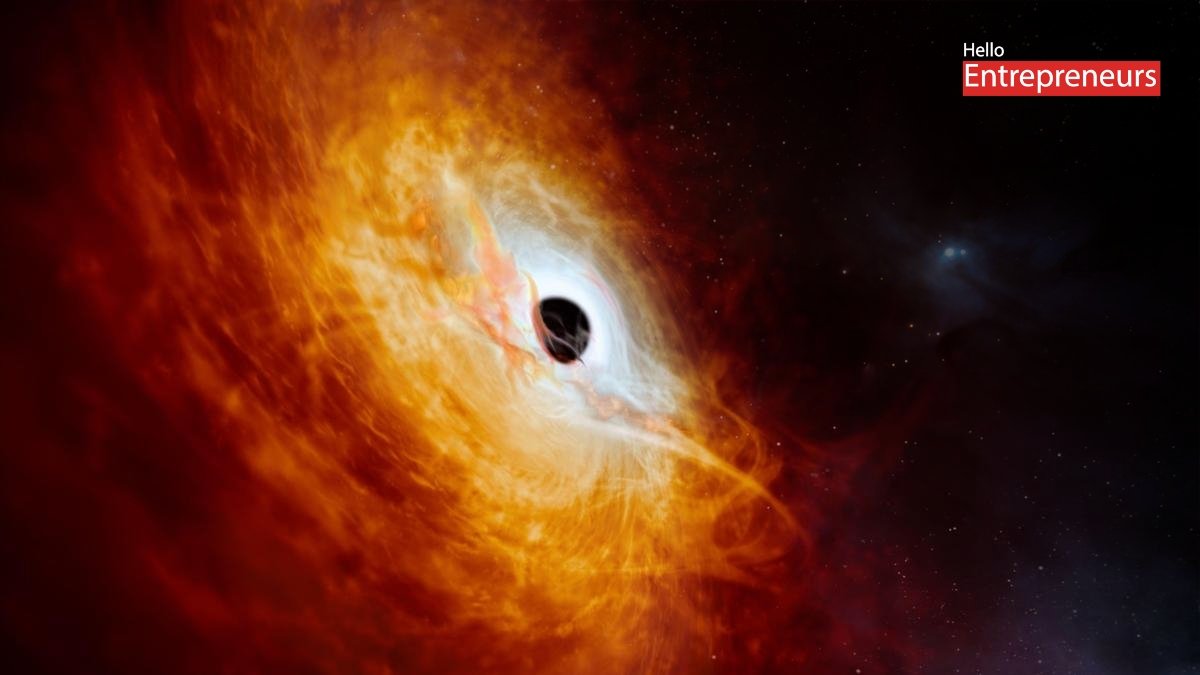
Research released by the European Space Agency’s (ESA) Euclid space telescope mission team shows that 31 of the most ancient quasars in the universe, boosting the number of known quasars in the first billion years since the Big Bang.
Two of the discovered objects are so distant they are seen as they existed about 670 million years after the Big Bang, putting them among the very first quasars ever discovered.
The findings were presented in a scientific paper and itemize Euclid’s ability to spot very distant, extremely bright objects while conducting its main cosmology survey.
Understanding Black Hole Growth in the Early Universe
Quasars are the extremely bright cores of galaxies where matter falls into a supermassive black hole. Light from the newly discovered quasars has taken more than 13 billion years to reach Earth, so astronomers are seeing them as they were long, long ago.
These newly discovered quasars help to provide more observational objects to better understand how supermassive black holes formed and evolved in the early universe. While the discoveries increase the known sample of high-redshift quasars, they do not themselves explain how these black holes formed and grew.
Discarded Quasar Discovery
Euclid and Cosmology
Launched by ESA in July 2023, Euclid was primarily designed to explore the nature of dark matter and dark energy as well as the large-scale structure of the universe with a series of wide-area observations in visible and near-infrared wavelengths.
The latest findings show that the survey capabilities of the telescope can also enable the discovery of rare and distant astronomical objects, such as quasars from early epochs in the universe.
According to ESA, Euclid is a high-resolution wide-field space telescope capable of conducting visible and near-infrared survey observations of the sky, allowing it to discover faint objects which can be difficult to find in ground-based surveys.
Scientific Relevance
Scientists claim that the larger sample of former quasars will enhance future research on the very early universe by providing additional objects for in-depth follow-up observations with complementary astronomical facilities.
The findings add to a growing understanding of the quasar population within the first billion years of cosmic evolution and complement Euclid’s core scientific mission, which aims to map the evolution of the universe across cosmic time.
The results were published by the Euclid collaboration in scientific preprint form while they are being peer reviewed.
<p>The post ESA’s Euclid Telescope Discovers 31 Ancient Quasars from the Early Universe first appeared on Hello Entrepreneurs.</p>